
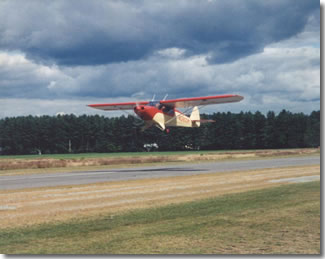
 While most of the training offered by DSFI, Inc. is given in fast, complex, high-flying aircraft, the heart and soul of our training regimen is the training we give in aircraft that have the little wheel in the back. Conventional geared, tailwheel, or taildragger. Call it what you will, flying these types of aircraft will redefine what flying is all about for most pilots.
The reasons that people elect to fly tailwheel aircraft are numerous, but all are valid. For some, it affords the ability to fly low and slow, allowing one to “smell the roses”. For others it is the only type of aircraft that can access remote or rough surfaced runways. For some it brings their mentality back to an earlier age of aviation when flying was not about ATC, and GPS, autopilots, TFRs and FARs, but about stick and rudder skills and being totally connected in a visceral way to the aircraft being flown. No matter what your reason…learning to fly a tailwheel aircraft will make you a better pilot! In fact the AVEMCO Insurance Company is so convinced of this that they offer a 5% discount, to those pilots that insure with them, that obtain tailwheel training
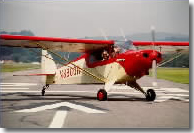
It is said that when “flying” a tailwheel airplane you are not done flying until the engine is shut down and the tiedown ropes are attached, and we will attest to that. Some of the most important lessons to be learned in a taildragger are those lessons on the ground, especially when the wind is blowing. In a tailwheel aircraft the center of gravity is located behind the main gear, not in front of it as in tricycle geared aircraft. This rearward CG aids and abets any crosswind to try and make the aircraft swap ends when it is on the ground.The way we keep this from happening is by deft use of our feet on the rudder pedals.
 |
Learning to fly tailwheel aircraft will not only awaken your feet on the ground but in the air as well. Most tailwheel aircraft have large ailerons and when they are deflected (to roll into or out of a turn) they create more adverse yaw than your average tri-gear. If your feet have atrophied from flying with them flat on the floor (perhaps you fly an airplane with interconnected ailerons and rudders like the Malibu or Bonanza), flying a taildragger will wake them back up.
At DSFI, Inc. we offer tailwheel transition training in a 1947 Piper Super Cruiser (PA-12). For most pilots of average skills the training will take approximately 5 – 10 hours, before sufficient proficiency is gained for the tailwheel endorsement.
The training will include:
|
The rate for this training is $170.00 per hour for dual instruction. Insurance restrictions prevent us from renting the aircraft, therefore we cannot offer solo flights. However, even if you never fly a tailwheel aircraft again, the skills that you will learn from us flying conventional geared aircraft will go a long way towards making you a much better pilot!
Come learn to fly real airplanes, with the little wheel in back, at DSFI, Inc.